Pageviews
Wednesday, October 16, 2013
The Mobile Gaming Dynasty
Many people nowadays have smartphones... or tablets... or computers... or iPods.... or whatever else that can play games. If you've ever owned any of the above stated devices, or even if you haven't, you've almost undoubtedly heard of Angry Birds.Angry Birds, to explain it really briefly, is a game where you fling birds at pigs. Weird concept, right? Well that weird concept that seems like it takes just a tired and oddball mind to think of has been transformed into an app that has made over a billion dollars, and in this post I am going to tell you how.
First of all I would like to go on a bit of a rant about the nature of the world. The initial game of Angry Birds stayed the top or one of the top apps for years. That's right, multiple years this one game has dominated the mobile gaming charts with tons of downloads. Second, there are other Angry Birds games released, such as a Rio theme, or a Star Wars theme, and those have sold almost as much!! They're the same exact game with a few minor changes!! Does nobody get that they continue to fund a company that is just releasing different versions of the same game!!
Anyway after that I'll go into a more professional discussion of Angry Birds. The game was created brilliantly in an addictive format that hoked people into a relatively simple game, and then charged most of them a dollar for it. The successive games were met with much the same success as the first allowing he company to alter very few things and make even more money, Then Rovio (the company that makes the game) moved into different kinds of games based off of it such as a game called Bad Piggies. Once again Rovio found a way to make more money off of the Angry Birds franchise! Then they introduced in-app purchases that could help you beat levels easier, nd guess what that did? That's right, made Rovio more money. Not to mention, of course, the plush dolls, pencils,and other merchandise sold.
So basically the money that Rovio has made in the last few years all has been based on the hype placed around a singlegame, and I'd say if there was ever a company that was hitting top marks in life, it would be them. Everybody in the tech world and outside can only dream of having a franchise multiply from a single game like this one did, and make it profitable beyond what many would have guessed possible.
Just a fraction of Angry Birds merchandise
429
Twitter Going Public
With social networking becoming a huge part of daily life, almost everybody in the world is now familiar with the popular social media site called Twitter. With over 500 million users, Twitter boasts one of the largest user bases of any other social network, with only Facebook that has a more users. As some may know who invest, Twitter is going public, and it has been rumored that its IPO (Initial Public Offering) will be on November 15th.
Twitter up until this point has seen enormous growth since its beginning, the number one factor as to why I think that this will be the stock to watch when it is finally publicly traded. The company has grown from zero dollars coming in when they started to racking in $500 million a year, roughly a dollar per user. There is only one problem with this: that $500 million isn't profit. In fact, the company is losing money despite its rapidly growing user base. This is the one problem I really see in the transition to public, because believe it or not, investors like to make money. To give Twitter a hand, they really have stepped up their adds around the site, putting a few subtle "promoted" tweets on your feed everyday. The hard thing for profitability is that Twitter might have to risk inconvenience, like a pop-up when the site opens, to really make money, something that has the potential to avert users. Obviously, profitability in a company is not a quick fix, and it will be very interesting to see how Twitter fares going public and what they will do to change their business model if that doesn't go too well or them.
One thing Twitter does have going for their stock price is their huge amount of users. This is sure to attract investors who hope to have some influence in a company that has a ton of people. Once investors get an in by buying shares the more influential ones (who now own a part of the company) have a say in investor's conferences and such to give a profit to Twitter. Just the sale of the stocks themselves will also bring in capital to Twitter. Unfortunately, at the cost of this help from investors Twitter's stock will likely lose some money initially until they can get heir profits turned around, and the might go up before that, as a company doesn't necessarily need to be profitable to increase their stock price.
Overall it will be interesting to see what happens to Twitter as it is publicly traded. In my opinion, this could be one of the smartest moves for the company. Although they give up some of the autonomy of a private company, they have the potential to make a lot more money if everything goes right for them. In the end, only time will tell, and my prediction will either be right or wrong in just a couple of months, lets hope for my ego's sake that I'm right.
503
Saturday, October 12, 2013
Tech Watches
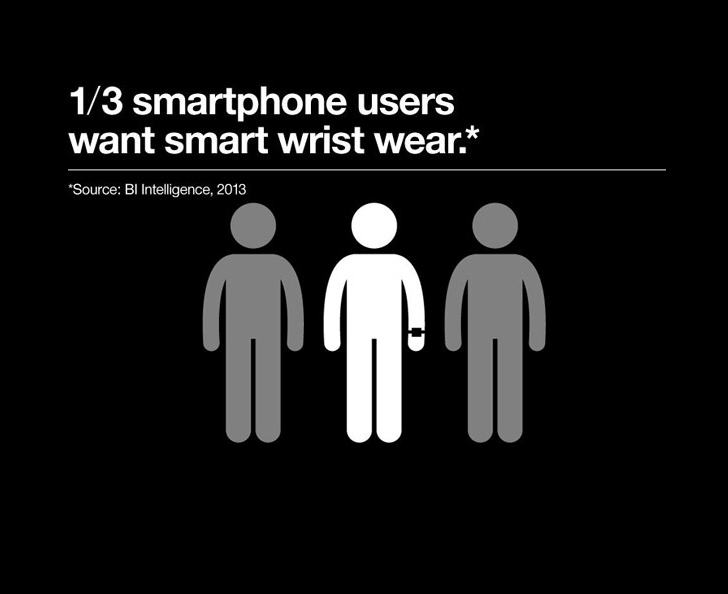
A little bit ago I posted about Google Glass, the first real widespread form of wearable technology that's gained any significant buzz. Today I'm going to cover a new form of wearable technology, a piece that many already own. Smart watches may seem a bit funny to think about, having a smartphone equivalent on your wrist, but there are some huge strides being made in the market that will one day make smart watches a pretty hot product.
I'll start out with the current smart watches. In the category right now, Samsung is the leader (who would've guessed?). They have two smart watches out called the Pebble and the Gear. Both of these watches connect to the Samsung Note phone but the Pebble also connects to Apple and other Android devices. These watches basically link to your phone and will receive much the same information. For example, if you get a text these watches will notify you of it and let you read it. The Gear even allows you to respond through voice command but its not very good. Once again with the Gear you can also make calls and can operate apps, such as Snapchat Micro, which uses its tiny built in camera. Overall the Gear, though newer and somewhat more improved than the Pebble, has a ways to go before it would become a viable commodity to technology users. The second smart watch that's out and working well is the Sony Smart Watch II, obviously a very creative name. This watch performs in a mash-up of the Pebble and the Gear using a touch display but no real microphone or camera or anything.
After reviewing what's out there its time to go to the possibilities. The world's most valuable company, Apple, is rumored to be creating a smart watch as reported by patent watchers. This is an interesting concept because historically Apple has released the right product at the right time in the right way, meaning that this could be the beginning of the era of smart watches. Other companies such as Google will invariably develop smart watches in the future as well, and they offer to be pretty cool.
Smart watches also have the potential to replace phones. If the watch has all the features of a phone and is more durable and easier to access, why not just drop the bulky piece of metal and plastic that you carry in your pocket or hand everyday? Smart watches are, in my opinion, a technology on the horizon of mass use, and I have already promised (on video) that I will be one of the first buyers of Apple's smart watch when it comes out.
The Galaxy Gear
One of the Rumored Designs of the iWatch
Wednesday, October 9, 2013
Phone Compare: Moto X vs. HTC One
For starters, the processors (controlling speed) are the same clocking in at 1.7 GHz (if that means anything to you). The two phones also have the same RAM, battery life, screen size... blah blah blah. So this comparison may have led people to believe that teh phone are the same, and to be completely honest, they're extremely similar. The main difference just from looking at it is the composition of the body. The HTC One has an aluminum body that is very durable and very lightweight while the Moto X is a soft plastic. If you were to throw both, the HTC One would hold up better, but not by much. Another difference is that the screen resolution is slightly better on the HTC One. Now its not huge at all, we're talking 1080p vs 720p, and most who have reviewed the Moto X testify that it doesn't look like a 720.
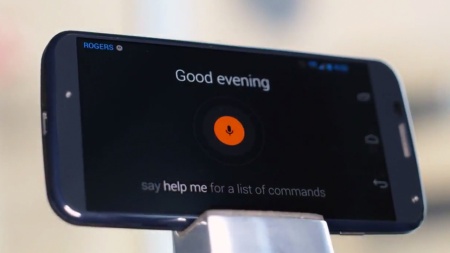
Even as I write the differences, many may be thinking that these are basically the same phone once again, and here is where I'm going to prove you wrong. See, the real difference between the two phones is the manufacturer: HTC vs Motorola. This matters because Motorla is owned by Google, aka the maker of Android. This allows the Moto X to have a different software design than any other smartphone. Its the first phone that you can experience what is called "full Android". For one, it has an enhanced lock screen for times when you shouldn't be looking at your phone continuously. It just looks black and displays what you need to know: texts, e-mails, notifications, etc. Another really cool feature is that the phone is always listening, for example if you say "Okay Google Now..." Google Now springs up ready to take input for a reminder, date, etc. Finally for majorly cool features, the phone can actually sense when you're driving to make navigation and reading texts more road-friendly. You can have text messages spoken out loud for example so you don't have to take your eyes off the road and potentially end up in an accident.
Overall I'd say just from the software alone and considering the fact that both phones have mostly the same hardware, that the Moto X is the phone to choose. I personally am switching in about a month and I may just write up a review after I get it.
Monday, October 7, 2013
Making Sight Cooler
Many
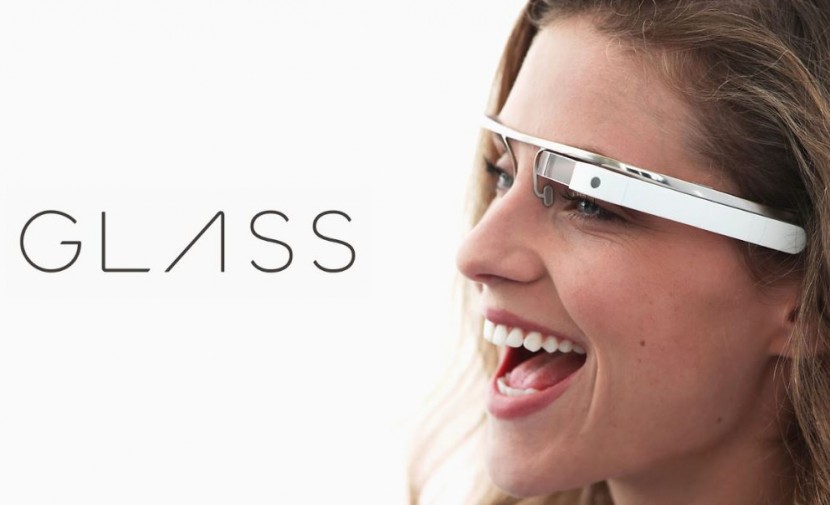
people around the world have bad eyesight and need glasses for it. The only problems
with the glasses of today are that the only thing that it helps with is your
eyesight. Google Glass is changing that with a pretty cool piece of technology
they've built. Google Glass is basically just a set of glasses with some processing
power built into a small compartment on the side. This compartment then
projects its operations onto the glass and what the user sees. The basic ideas
that Glass started out with is using it for a GPS. Why plug in an address when
you can speak "I want to go to San Francisco" and it can give you a
route there. Another intended use was to be synced with a person's phone such
as with smart watches. For example, say you get a text while you're at a
meeting, instead of pulling out your phone and being disruptive you can just
look in the corner of your glasses and look at it. This could work the same way
with tweets, e-mail, and news. Those are some of its basic intended uses, but
as always the people have thought of more. What Google has done is allowed
developers (talented ones) to write software for apps on Glass. Some apps that
have been proposed are the familiar Snapchat, which would use the built-in
camera to take a picture easier than with a phone. There has also been an app
that was developed that you can take any given building and redesigns the outer
design with what you see. There are some pretty cool ideas out there for Glass,
and unfortunately at the stage that Glass is in in development, it just can't
handle a lot of things. Not to mention it’s only available by getting it
especially provided to you by Google, and if it does get released publicly, it
will be over $1000. Google Glass has brought up some ethical arguments as well
about how integrated humans are with technology, an argument doubtlessly
brought up with every new gadget, but actually a lot more relevant here. One
argument is asking if anyone would be able to stay focused. If you've
constantly got updates that you're looking at while driving or while at work
will people ever be productive? That focus question also brings safety into it.
Although apps have the potential to make the roads safer by making drivers more
aware of their surroundings, it also has the potential to distract them. All in
all Google Glass is a very interesting idea that with some work and some good
old American ingenuity could be a very viable and useful tool for society.
Thursday, October 3, 2013
The Rising Star of Samsung
I’m sure that everyone who will read this has probably heard
about Samsung. Over the last 10 years Samsung has grown exponentially in their
market share of the electronics industry. Many are familiar with their Galaxy smartphone
line and their Smart TV’s, but what you may not know is where did they come
from, and what has enabled them to get as far as they did. If you guessed that
Samsung started out in electronics, you are dead wrong. Samsung started out in
the 1930s as a fish company, and in the 50s grew into textiles and life
insurance. The Samsung we now know was the product of a decision to switch to
electronics. Samsung started out with TVs, then moved to refrigerators,
computers, computer parts, smartphones, cameras… long story short there are
almost nothing that uses electricity that Samsung doesn’t make. But how did
they get this good at what they do? The first one is that Samsung products are
very reliable. This is what drives many consumers in their direction. The
reason for this reliability and also another reason why they sell so much is
that they make most of their own parts. This both drives cost down and helps
the computer work well. Having parts from the same company is like having a
bike with parts that are made from the same company. If you have a bike and the
wheels, frame, and cables are all made from a different company they might not
have the exact measurements for your particular bike, making it work just a
little worse. Samsung has also been smart by incorporating products they’ve
already built into their new products. For example, next time you look at a
Samsung product look at the screen and compare it to another. Samsung generally
has very good screens due to their manufacturing of TVs, an advantage that
companies like Asus or Lenovo don’t have.
All in all if you are looking at buying any electronics, Samsung is a
good option. Although they’re relatively new to markets such as personal
computers or cameras, Samsung tends to go all-out in a new product. Just about
everything they make is a reliable, cheap, and high performance product. And to
think, this top-level computer company started out as a fish company, who would’ve
thought of that?
Samsung's Smart TV
The new internet-connected Samsung Camera
Wednesday, October 2, 2013
A World Using Only the Internet
The Internet: Where you can find these pictures....
...or a full account of the French Revolution
Subscribe to:
Posts (Atom)