Pageviews
Saturday, April 5, 2014
Why Everyone Should Build a Computer
In the past week, my parts have finally come in and I am now in the process of assembling my first build. Ever since I was little, I have loved computers, and that is the profession I want to go into after college, so building my own computer sounded logical to me. As I went through it though, I realized that building a computer isn't only good for people who are really into it, but it is a valuable experience for everyone in a time when computers are becoming increasingly integrated into our lives. First, it is good because it gives you a greater understanding of technology, and it is much more cost effective.
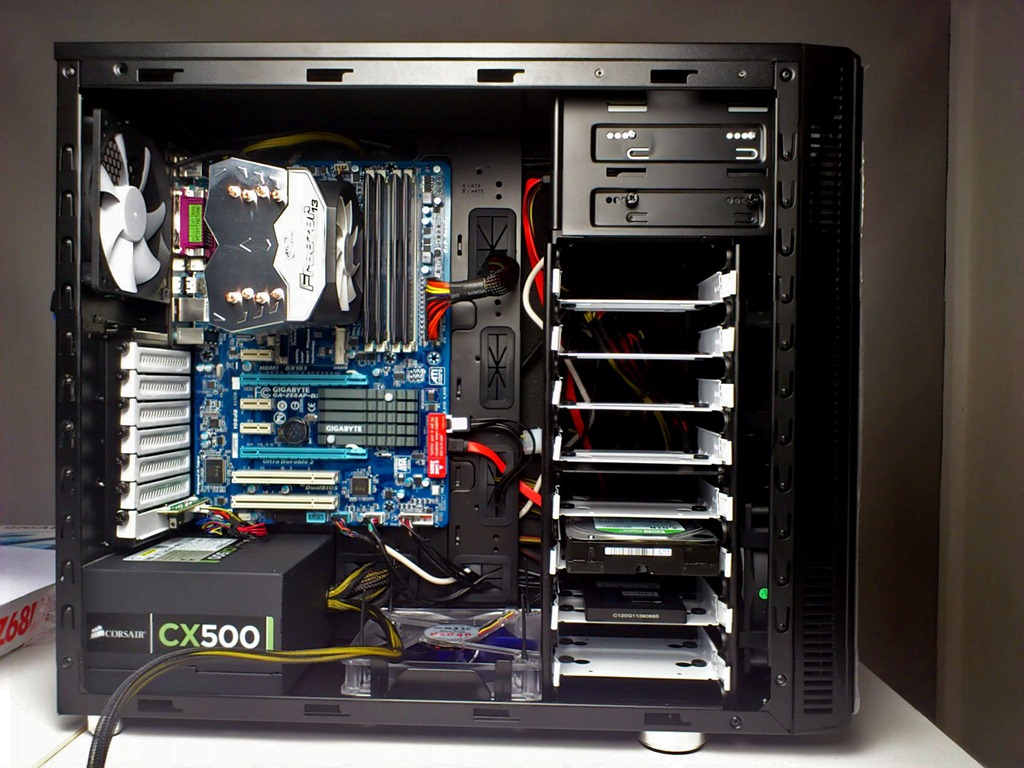
Everyone should at least try to build a computer once in their lives because the knowledge that you gain is huge. You start out just picking out all the parts you want to put in there (I would recommend using pcpartpicker.com). At that stage alone you learn about compatibility, brand integrity, software basics, etc. After you pick out everything you want and check the compatibility on all of it, you order the parts, which is a learning experience within itself. You aren't just picking up a computer ready to go after you;ve ordered it, you're getting the raw materials for it and putting it together yourself, which Lifehacker says incredibly rewarding in itself. Once you finally get all the parts, you start to assemble it from videos, which is the fun part. It's extremely nerve-wracking,my build for example, which is about $850, is probably the most fragile $850 I've ever handled, and I had a light sweat going just watching the video preparing myself for when I was going to do it. A lot of people are scared that its going to be really hard to put your PC together, but as I and PC World can say, its actually not that bad, and is incredibly rewarding to say that you are building/have built a computer by yourself!
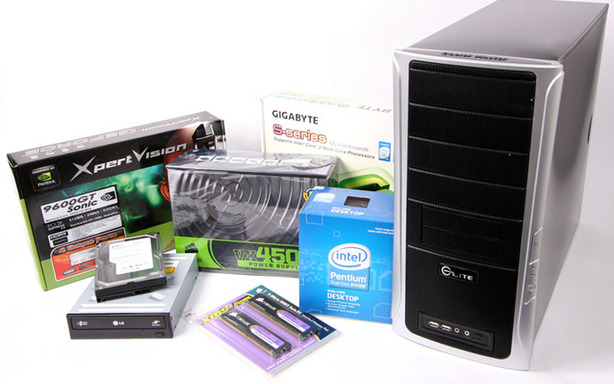
The second reason I believe that everybody should build their own computer is that it is significantly cheaper for the parts you get as compared to what you could buy in the store, pre-built. For example, my $850 build would likely be significantly more if I were to buy it. Even spending the same amount of money, the computer that I would get would be much lower performance than the one I am building. As Digital Trends points out though, its really only a great argument for building it yourself if you're spending over $600. Even though you might only be looking at a $300 computer that would be comparable to what you could buy already built, I would still strongly recommend building instead because its much easier to upgrade, you get to choose your own parts, and you get the experience that I was talking about in the last paragraph.
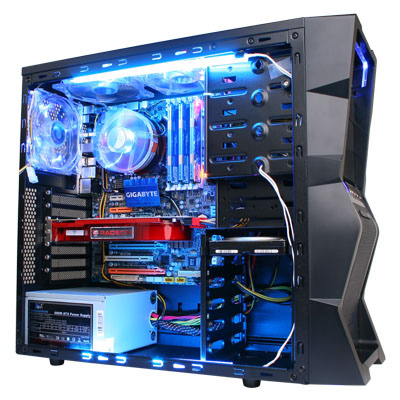
IN the last 20 years, the trend that technology is being integrated into our lives at an astounding pace is uncontested. Many people just buy their electronics ready-to-go, but in computers, I would encourage everybody to build at least one in their lifetime. Building your own computer gives you an invaluable learning experience and is much more cost-effective.
Thursday, April 3, 2014
Amazon Fire TV
Amazon just came out with its brand new Fire TV. In the past, Amazon's hardware has been less than satisfactory with low-performing parts, awful software, and little support from developers. Amazon has somehow been kept afloat though due to their well-done commercials that entice consumers to their products as opposed to other items that don't have commercials, notably Samsung and Nexus in the tablet line. Fire TV is Amazon's attempt at getting Amazon into the running for entertainment in the living room, but it doesn't live up because of its bad software and its obvious paling in comparison with other devices of its kind.
Amazon would like to be firmly set in the growing area of home entertainment with Fire TV, and although the hardware specifications are impressive, the software ruins the initial allure. First of all is the continued use of their modified Android OS, using a category selection model that works horribly for tablets, and is not much improved for their Fire TV. It is closer in design to that of Apple TV, but continues to have nuances in selection. The second reason that the software is lackluster, is because their addition of an apps store has caused the box to be labeled as a partial gaming device, attempting to contend with the consoles, as the Wall Street Journal reports. This is a major problem for Amazon, because although it is good for an android gaming device, it is nowhere close to having the quality and the wide range of console gaming (not to mention the controller is an extra $40). Amazon seems to be leaning more toward trying to replace the Ouya, a similar Android gaming device that fell horribly short of its expectations from its Kickstarter days. The gaming is little more than what you can do on your phone at this point, therefore attracting very few people to that aspect. On the bright side, they may get more immersive games in the future, as reported by TechCrunch. The addition of gaming to the traditional watching entertainment put Amazon straddling several distinct markets at once, and their current software does not allow them to do that with success. The software is not well thought out, and the capabilities are too far-reaching for the software to perform well enough in any of the different forms of entertainment it attempted to incorporate.
Amazon's startegy for the family room is also flawed because compared to other products out there that resemble it, it just doesn't add up. The most obvious is the Chromecast, a $35 HDMI dongle that takes media straight from your device and puts it onto your TV. Compared to the Fire TV coming in at a solid $99, for media like Netflix, YouTube, Hulu, you just cannot beat Chromecast. If you are looking for gaming, you would definitely want to look into a dedicated console. The Xbox One and Playstation 4, although at least $300 more expensive, are a much more viable option for TV gaming, as you will get more developed titles and better game play, not to mention that you can also use media on these. If you want to go with a low end gaming console, I would recommend the Ouya, which even though disappointing in gaming as a whole, has a lot more dedicated and complex games that you won't get, at least right now, in Fire TV. The only reason I could really see anybody choosing Amazon Fire TV for their home entertainment is for a very light meshing of the two realms, knowing that they won't get much performance in either respect as they could in other products. Compared to like products out there, Fire TV just does not compare.
Amazon's brand new device is adding another market in their hardware section, in addition to the Kindle E-Reader and the Kindle Fire tablet. As with its previous hardware, it just does not work very well, and is not a sensible option for the market its trying to bring in.Fire TV is Amazon's attempt at getting itself into the the living room, but it doesn't live up because of its bad software and its obvious inferiority compared to other like products.
Saturday, March 22, 2014
Is Facebook Dead?
Facebook. One of the largest and influential companies in the world today. They operate the largest social network in human history, with about 500 million members. With this kind of membership, it is almost guaranteed to never die, right? No, at least kind of. Facebook is dead in the sense that they are no longer the young, news-based, active network it used to be, but has cleverly worked in protection for itself into its very structure.
First, what has happened to Facebook. I have not been on my Facebook for months, if I have logged in at all it was probably to silence all of the annoying "you have notifications" e-mails I kept getting. My problem is that Facebook quickly became too much older family and not enough younger friends. I finally had it about 2 years ago and got a Twitter and an Instagram, which are luckily still very much alive. The second problem I have with Facebook now is that it doesn't seem to be a "real" social network anymore. Its mostly just baby pictures and huge paragraphs of stories from those aunts and uncles who spend way too long on there (no one in my family, but I've seen some other people's). To me, Facebook is dead, a place where older people occasionally check in to what is going on, with none of the youthful culture that used to exist. This doesn't necessarily mean that Facebook is going to come down tomorrow though.
The reason that Facebook is still alive is that it has worked its way into an alarmingly large number of things in our lives. Games, stores, even other social networks have a lot of people who sign up through connected Facebook accounts. This may be the single-handed best decision that Facebook made, because for me, its the only thing that is stopping me from deleting my account. That and the huge amount of family I have on there, who would grill me at the family reunion as to why I disappeared from Facebook.
So in conclusion, I wholeheartedly believe that Facebook as we know it is dead. Zuckerberg should really just brand it as a data repository to be used to have a central account for everything. I feel bad saying this, because I really admire Mark Zuckerberg, but to be honest, I don't see any future at all in what used to be the latest and greatest social site ever to grace this Earth. RIP.
Tesla
I'm writing from California tonight, where I plan on going to college, and walked through Rodeo Drive, and saw the Bentleys, Lamborghinis, Ferraris, and the Maseratis. Of all these expensive cars, only one brand is completely electric, and that is Tesla, manufacturer of the Roadster, Model S, and is coming out with the Model X soon. Now these cars are electric, and incredibly expensive, think upwards of $65,000. My driver's ed teacher explained to my class that it was basically a "Prius on steroids" when I brought in an article on the Model S for an assignment. Tesla has had a pretty cool history, and they have an even better future set up.
Tesla was created in 2003, and had the Roadster as its only car. The roadster was a luxury sports car design that, of course, ran fully off of electricity. The company, interestingly enough, did not post profits for 10 years, finally achieving actual financial success in the first quarter of 2013. Elon Musk, of who I am a big fan and wrote another blog about earlier, is the current CEO of the company ad was one of the main proponents of the Model S. The Model S costs about $70,000 and is a luxury sedan. The genius of this car is that it can garner a wider customer base, so when it was introduced,it was much more popular than the Roadster. The cost and the style of the car are both much more suited to business than the Roadster, allowing the profits that finally came in 2013. Tesla is now arguably the leader in electric automotive technology, and has quite a future ahead of it.
Tesla is poised to go places with the leadership of Elon Musk. One thing he really believes in is their superchargers which can fully charge the car for over 200 miles in a little over an hour. He actually wanted to drive across the nation using only superchargers, so the 85 they currently have built are built in a line across the nation, which will be awesome if Musk ever carries it out. The second most promising part of Tesla's future is their upcoming Model X. This is going to be a crossover vehicle, widening the customer base even more to appeal to those who have Range Rovers or Porsche SUVs currently. In the future, I see Tesla being a very dominant brand throughout the motor world, its already pioneering the future of what all cars will be soon. 've loved this company ever since I saw my first Roadster at my apartment in Washington DC 3 years ago. They've come a long way since that time, and will only continue to improve themselves.
Wednesday, March 19, 2014
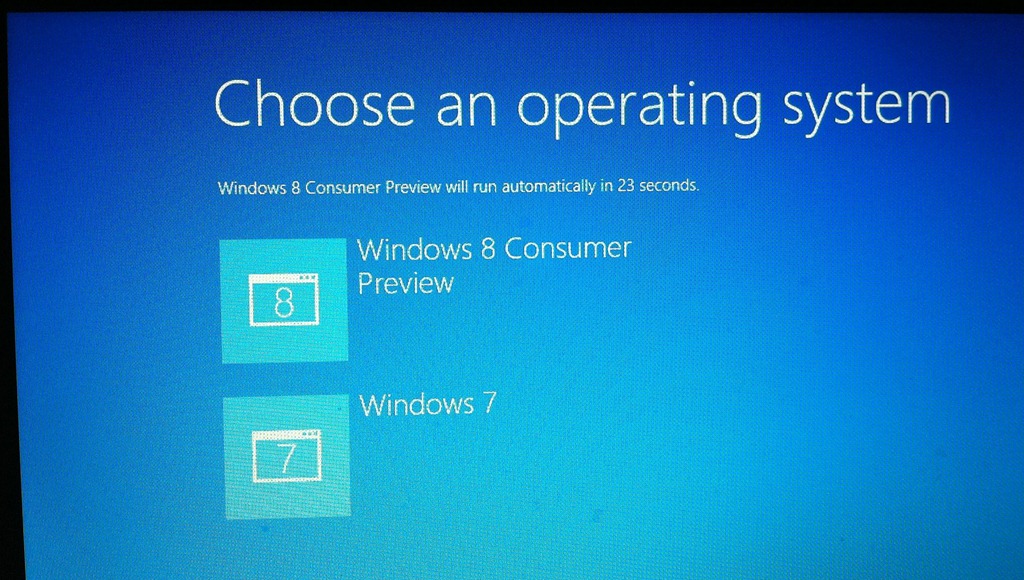
Dual Booting
I've written a lot of posts in the past about different operating systems I've experimented with, whether its Windows, iOS, Android, OS X, or Linux, each offers a slightly different user interface and different features. Many people decide to do what;s called dual-booting, which is setting up your computer so that you have the option to do one or the other, without having to buy a new computer with the other operating system you want. This method has multiple advantages to it that make it a common trend among people who use their computers a lot. This trend has also been translated to the corporate world, where rumors are popping up about pre-set dual booting machines.
Dual booting operating systems has a of of advantages to it. Personally, I am running Windows and Ubuntu on my desktop. I like this configuration because I can have the drivers and support I need for some of my software on Windows that I wouldn't be able to get on Ubuntu. Likewise, since Unbuntu is open source I can go outside the box on Ubuntu like Windows does not allow you to. The combination, though I favor Windows, provides the perfect combination for me to keep my work efficient and to mix it up every now and then with new learning experiences on Ubuntu. I have also yearned for the combination of OS X with Windows, because there are a lot of things whichI like doing on Mac better than I like doing on Windows. Unfortunately Apple makes this a bit difficult since they make you buy an Apple product first in order to do that.
Recently there has been talk of machines coming pre-built with dual-boot capabilities. Huawei announced they were making a phone that could dual-boot Windows and Android, which hasn't really been done before that I know of, short of a hacker's version I saw once. HP also announced creating a computer that could dual-boot Windows and Android. In both these cases, the project has been scrapped because Google and Microsoft didn't want both of their operating systems on one device. Personally, I don't understand the reasoning for this, as it seems as though it would help both companies, because instead of a competition for customers and what operating system they could choose, you work together to upsell your shared product. Seems like a win-win to me, less work on competition at the very least. Now I see the obvious flaws in my reasoning like monopolizing the marketplace and lack of innovation in the absence of competition, but it would seem like a viable option to just have few of these machines on the market!
Dual booting allows users to put all of the advantages of multiple operating systems on one device, instead of having to go out and buy separate devices for each one. This is very helpful to the user, as well as continues the learning curve for computers if you were born in the generation where you need that stimulation. Companies have started to catch on and develop machines that dothis without any work by the user, which have been scratched at the moment, but which I dearly hope will arise again because its a very good practice.
Saturday, March 15, 2014
Galaxy S5
Its been out now for a couple weeks, Samsung is continuing their annual release of their flagship S line. It was in Madrid that this happened, and the S5 is the newest product they have. At this point, as far as total specifications go, Samsung now has the best phone on the market. Samsung had a lot of hype for this phone, and much of it lives up, but there are some places I see some issues.
The specifications on the S5 are amazing to say the least. 2.5GHz processor to start with, which now tops the market for the fastest in any phone. 2GB of RAm and a 16MP camera as well, both of which are stellar in the phone market. The operating system comes with the standard array of exclusive Samsung apps, which offer great deals and allow integration with other Samsung devices, such as their TVs or one of the smartwatches they have (they released 3 new smartwatches at the sime time as the S5).
Now for my hating on this phone. First off, I don't like the casing. I've never been a fan of Samsung's plastic casing, but the S5 has little divots in the back, and I cannot stand to look at it. It looks almost the opposite of high-tech, on a device that is supposed to embody that ideal. Of course, you can fix this by putting a case on. Second thing I am going to detract on also is a legacy, and that is Samsung's custom launcher. You can also solve this problem by installing your own launcher like the case solution for the back. I have never liked the stock Samsung launcher, I find it too slow and simply laid out. That may not be very clear, but the bottom line is that I personally just don't like its feel when compared with other android devices.
The S5 is ushering in a new wave of phones, and it is an exciting time. Processing is getting faster, as we just broke the 2GHz level in the G2 a few months ago, and have now broken 2.5GHz (even though the full capacity is rarely used on a mobile device right now). I think the S5 is, as always, the first phone in the year's new line-up that promises to be quite a step forward.
The specifications on the S5 are amazing to say the least. 2.5GHz processor to start with, which now tops the market for the fastest in any phone. 2GB of RAm and a 16MP camera as well, both of which are stellar in the phone market. The operating system comes with the standard array of exclusive Samsung apps, which offer great deals and allow integration with other Samsung devices, such as their TVs or one of the smartwatches they have (they released 3 new smartwatches at the sime time as the S5).
Now for my hating on this phone. First off, I don't like the casing. I've never been a fan of Samsung's plastic casing, but the S5 has little divots in the back, and I cannot stand to look at it. It looks almost the opposite of high-tech, on a device that is supposed to embody that ideal. Of course, you can fix this by putting a case on. Second thing I am going to detract on also is a legacy, and that is Samsung's custom launcher. You can also solve this problem by installing your own launcher like the case solution for the back. I have never liked the stock Samsung launcher, I find it too slow and simply laid out. That may not be very clear, but the bottom line is that I personally just don't like its feel when compared with other android devices.
The S5 is ushering in a new wave of phones, and it is an exciting time. Processing is getting faster, as we just broke the 2GHz level in the G2 a few months ago, and have now broken 2.5GHz (even though the full capacity is rarely used on a mobile device right now). I think the S5 is, as always, the first phone in the year's new line-up that promises to be quite a step forward.
Apple On The Go
Apple recently announced their newest product in a completely different line then they've ever delved into before. This new product is Carplay, in other words, iOS 7 in the car. Right now it is only in a few models from Ferrari, Honda, Hyundai, Mercedes-Benz, and Volvo. This is the first step in anther form of complete integration of technology into our lives. Its an amazing step forward in efficiency, and just the first product which is sure to become as booming a market as the many other integrated technology products that have come out recently.
Carplay is a replacement of the dash board, essentially. It varies a little bit by manufacturer, but the basic idea that comes with each is that you connect your iPhone into your car, and that's where the magic happens. You can answer calls, play your music, and get phone navigation. The idea behind it is that Apple is accepting the fact that people are using their phones in the car, so they are attempting to make it safer to keep yourself connected while in the car. I'm personally excited about this for two main reasons: it consolidates a lot of separate technology into one user interface and it foreshadows the entrance of other companies into the same realm.
First: the consolidation. Carplay combines the traditional GPS unit into an auxiliary chord, a call-answering system, and a satellite radio. Those are rough estimates, as everything is slightly different, but the main idea is that Carplay, despite the higher cost of the car, actually saves you quite a bit of money. You're looking at at least $200 to get something equivalent for a "normal car". What I am looking more forward to though is that the introduction of Carplay almost guarantees the emergence of other companies into the integrated car technology market, As always, I am most looking forward to a Google system with android, especially because I myself do not have an iPhone anymore. I think that an android product will create the competition needed to really develop this market into something that is built into every single car.
Integration into our lives has been inevitable in the spread of technology over the years. The latest is Carplay, which aims at bringing together separate technologies and making technology in the car safer. I realy like the idea of this technology, and I really want an android system to match. Time will only tell is this kind of integration survives, but my personal opinion is that it will stay and it will grow to become a staple of our driving experience.
Subscribe to:
Posts (Atom)